
Blog Reflection: Picturing Children’s Stories on Zooniverse
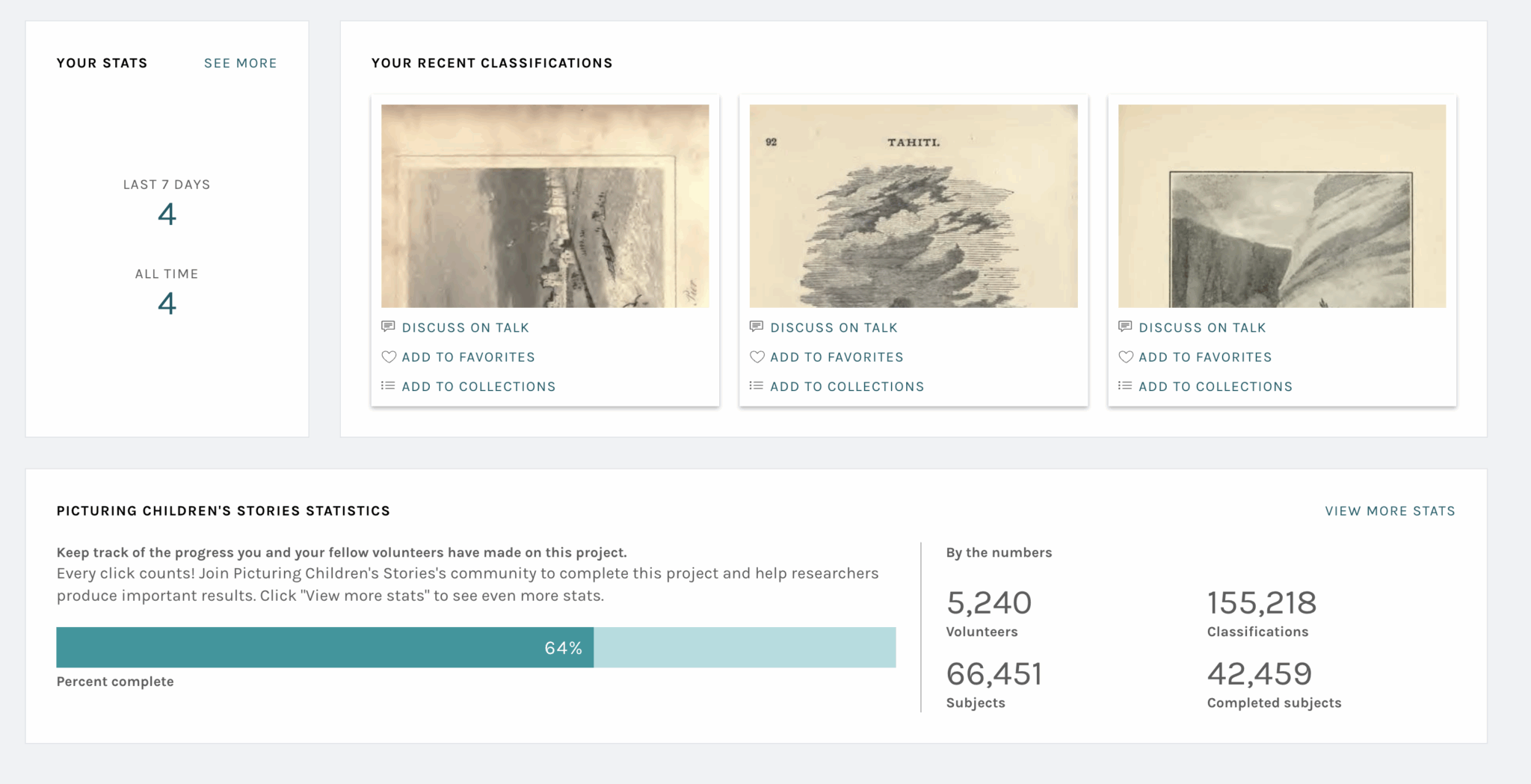
Screenshot of my work on the “Picturing Children’s Stories” project
For this week’s crowdsourcing project, I joined the Picturing Children’s Stories project on Zooniverse. It’s a collaborative effort where volunteers help tag and describe illustrations from old children’s books to make them more searchable and useful for researchers. After reading the tutorial, I started classifying images by identifying people, animals, settings, and objects. I noticed lots of recurring images: young white children reading, playing, or learning lessons in nature. The activity itself was surprisingly fun, almost like a digital scavenger hunt, but after a while, I started thinking about what I wasn’t seeing in these pictures.
That realization tied back to what Gallon calls “recovery work” in the Black Digital Humanities. Gallon argues that it’s not enough to just digitize historical materials—we also have to ask whose stories are being recovered and what gets left out. Working on this project made that visible. These illustrations preserve an important part of literary history, but they also reflect a very limited version of childhood: one that’s white, middle-class, and idealized. In other words, even though this project is about preservation, it also shows how digital archives can reproduce the same exclusions that existed in the physical ones.
I also thought about Earhart’s point that digital collaboration depends on invisible labor. My tagging work contributes to a bigger archive, but I don’t get credit for it. My effort blends into a massive, anonymous dataset. Still, there’s something cool about that collective aspect; it shows how digital humanities can democratize scholarship even while institutions still control what “counts” as knowledge, which Brown talks about in her work on archives and power. Overall, Picturing Children’s Stories reminded me that crowdsourcing isn’t just about participation. It’s about understanding how these digital systems shape whose stories we see, and whose we don’t.
Project Link: https://www.zooniverse.org/projects/citizenreaders/picturing-childrens-stories
Citations:
Gallon, E. (2016). Making a Case for the Black Digital Humanities. Debates in the Digital Humanities.
Earhart, A. (2012). Can Information Be Unfettered? Race and the New Digital Humanities Canon. Debates in the Digital Humanities.
Brown, A. (2015). Archives, Power, and Community: Digital Humanities and the Politics of Access.
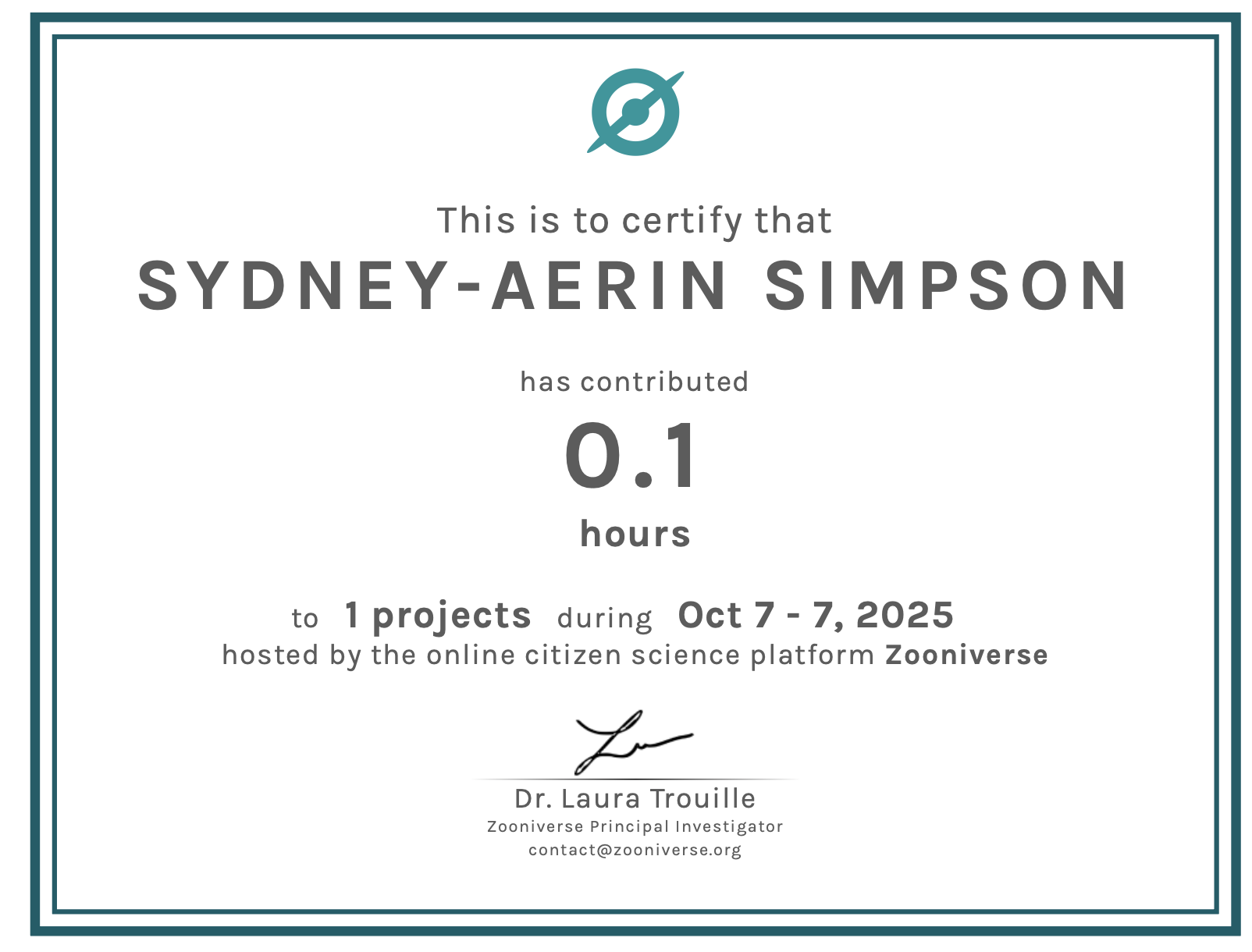
An account of my participation in the project
